
WPM reading test
Read the passage aloud, stop the timer on the last word, and get your words-per-minute speaking pace instantly.
Test passage · 188 words
Press start, read the passage aloud at your natural pace, then press finish on the last word.
Happy with your pace? Keep it steady on camera with the free voice-following teleprompter
This WPM reading test measures how fast you speak when reading aloud — the number that actually matters for videos, presentations, and voiceovers. Start the timer, read the passage out loud at your natural pace, and press finish on the last word. You'll get your words-per-minute score plus what it means for your delivery. No sign-up, no microphone access — just a timer and your voice.
What your WPM result means
There's no single 'correct' speed, but read-aloud results cluster into recognizable bands:
- Under 110 WPM: deliberate — commanding for formal speeches, slow for online video
- 110–140 WPM: relaxed conversational — easy for any audience to follow
- 140–165 WPM: steady presenter — the sweet spot for videos and narration
- 165–190 WPM: brisk — energetic, broadcast-style delivery
- Over 190 WPM: rapid — fine in bursts, hard to follow at length
Reading aloud vs. reading silently
Don't compare this score to a silent reading test. Adults read silently at 200–300 words per minute because the eyes can skip ahead, but speech is limited by articulation — your mouth simply can't keep up with your eyes. A read-aloud pace of 150 WPM is quick; a silent pace of 150 WPM is slow. This test measures the spoken number, which is the one to use when timing scripts and speeches.
Why speaking pace matters on camera
Pace shapes how your audience experiences you. Too fast and viewers miss key points, captions lag, and you sound nervous. Too slow and watch time drops as attention drifts. Knowing your natural WPM lets you time scripts accurately, pick realistic video lengths, and notice when nerves are pushing you off your baseline.
How to change your pace
Pace is a trainable skill, not a fixed trait. Practice reading aloud a few minutes a day, mark pauses in your script and honor them, and record yourself weekly to track your number. The fastest fix for on-camera pacing is a teleprompter that follows your voice: because it scrolls at whatever speed you speak, you can slow down, pause, and emphasize freely — instead of racing a screen that scrolls at a fixed rate.
Frequently asked questions
What is a good speaking pace for videos?
Around 140–165 words per minute for most video content. It's fast enough to feel energetic and hold attention, but slow enough that every word registers and auto-captions keep up.
What is the average reading-aloud speed?
Most adults read aloud at 150–160 words per minute in a neutral, unhurried delivery. Everyday conversation runs a little slower, at 120–150 WPM.
Why is my WPM lower reading aloud than reading silently?
Silent reading isn't limited by your voice — your eyes can jump ahead and skip words, which is how people reach 200–300 WPM. Speaking requires physically articulating every word, which caps most people below 200 WPM.
How can I slow down when presenting?
Build pauses into your script and treat them as content, not dead air. Breathe at punctuation, and rehearse with a voice-following teleprompter — since it waits when you pause, it trains you out of the racing habit that fixed-speed scrolling creates.
Does my result depend on the language I speak?
Yes — words-per-minute varies across languages because average word length differs. This test uses an English passage, so treat your score as your English read-aloud pace.
Keep exploring
Script timing calculator
Paste your script and see how long it takes to read aloud at any speaking pace.
Speech length calculator
Set your time slot and speaking pace to get the word count your speech should be.
Word counter
Count words, characters, sentences, and paragraphs, and see the reading time silently and aloud.
Teleprompter scroll speed calculator
Convert your speaking pace into the scroll speed a fixed-speed teleprompter needs.
Free speaking tools
Free tools for speakers and creators: count words, time a script, size a speech to your slot, measure your speaking pace, and set a scroll speed. No sign-up.
Sayscroll — AI teleprompter
Paste your script and the prompter scrolls as you speak. Free to try, right in your browser, in 60+ languages.
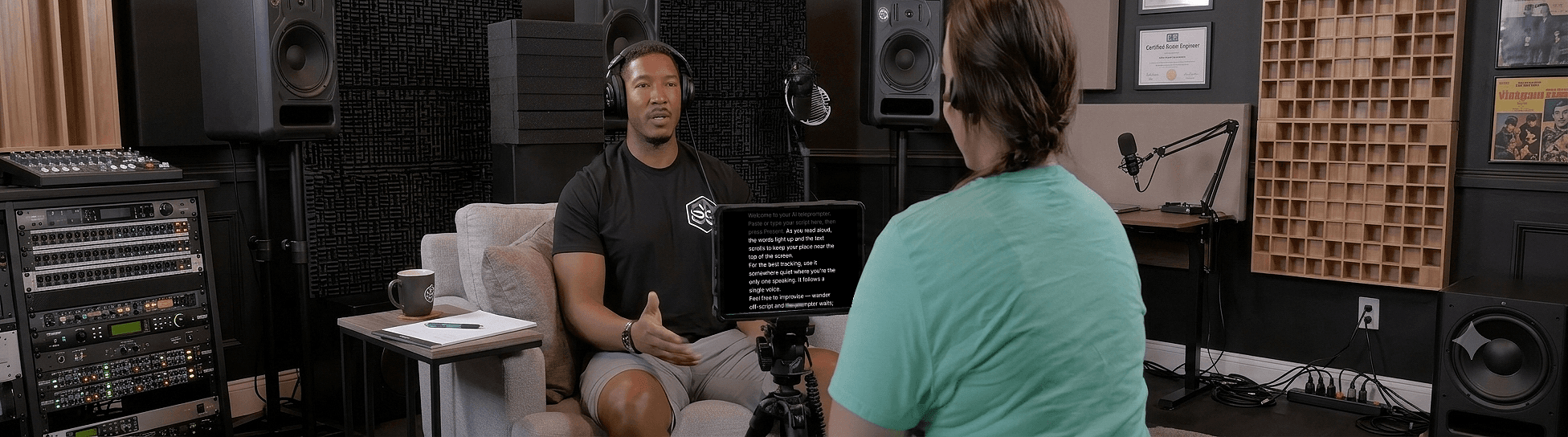
Speak naturally — Let the script follow you
The AI teleprompter that scrolls as you speak — in 60+ languages.