
Speech length calculator
Set your time slot and speaking pace to get the exact word count your speech should be — before you write a word too many.
How long is your time slot?
Your speech should be about
700 words
≈ 4,200 characters · ≈ 2.8 double-spaced pages
Common speech lengths at 140 words per minute
Draft written? Check it against the clock, then rehearse it with the free voice-following teleprompter
A speech length calculator works backwards from your time slot: tell it how long you're allowed to speak and how fast you talk, and it gives you a word-count target to write to. It's the easiest way to avoid the classic mistake of writing a 12-minute speech for a 5-minute slot. Set your duration and pace below — the target updates live, along with quick references for common speech lengths.
How many words per minute in a speech?
Speeches run slower than everyday conversation. A formal keynote with pauses for emphasis lands around 100–130 words per minute, while a relaxed, conversational talk sits at 130–150 WPM. If you're not sure where you fall, 130 WPM is a safe planning number for live speaking — it leaves room to breathe without dragging.
Word counts for common speech lengths
At a typical live-speaking pace of about 130 words per minute:
- 2-minute toast or introduction: about 260 words
- 5-minute speech: about 650 words
- 10-minute presentation: about 1,300 words
- 15-minute talk: about 1,950 words
- 20-minute conference slot: about 2,600 words
- 30-minute keynote: about 3,900 words
Plan for pauses, laughter, and applause
Word count only measures continuous speech. In front of a live audience, you'll lose time to applause, laughter, questions, and the pauses that make a speech land — often 10–20% of your slot. If your time limit is strict, write to 85–90% of the calculator's target so you finish comfortably rather than getting cut off at your best line.
Writing to fit the time slot
A few habits make hitting your target much easier:
- Write for the ear: short sentences, everyday words, one idea per sentence.
- Read every draft aloud — the clock and your mouth catch what silent editing misses.
- Cut the weakest 10% before you rehearse; every speech has it.
- Rehearse at your real pace with a teleprompter so the timing you measure is the timing you deliver.
Frequently asked questions
How many words is a 5-minute speech?
About 650 words at a typical live-speaking pace of 130 words per minute. A slower, formal delivery needs closer to 550 words; a fast conversational pace can carry 750.
How many words is a 10-minute presentation?
Roughly 1,300 words at 130 WPM. If your presentation includes slides, demos, or audience interaction, write less — those minutes come out of your word budget.
How many pages is a 20-minute speech?
About 2,600 words, which is roughly 10 double-spaced pages (or 5 single-spaced) in a standard 12-point font.
Is it better to run short or long?
Short, almost always. Audiences never complain about a speech ending a minute early, and organizers will thank you. Running long steals time from whoever follows you and forces you to rush your ending — the part people remember most.
Should I write my speech word-for-word or use bullet points?
Word-for-word is better for timing accuracy and high-stakes moments; bullets feel more spontaneous but make your length unpredictable. A good middle path: script it fully, rehearse until it sounds natural, and use a voice-following teleprompter so you can deliver the exact script without sounding like you're reading.
Keep exploring
Script timing calculator
Paste your script and see how long it takes to read aloud at any speaking pace.
WPM reading test
Read a short passage aloud and measure your words-per-minute speaking pace.
Word counter
Count words, characters, sentences, and paragraphs, and see the reading time silently and aloud.
Teleprompter scroll speed calculator
Convert your speaking pace into the scroll speed a fixed-speed teleprompter needs.
Free speaking tools
Free tools for speakers and creators: count words, time a script, size a speech to your slot, measure your speaking pace, and set a scroll speed. No sign-up.
Sayscroll — AI teleprompter
Paste your script and the prompter scrolls as you speak. Free to try, right in your browser, in 60+ languages.
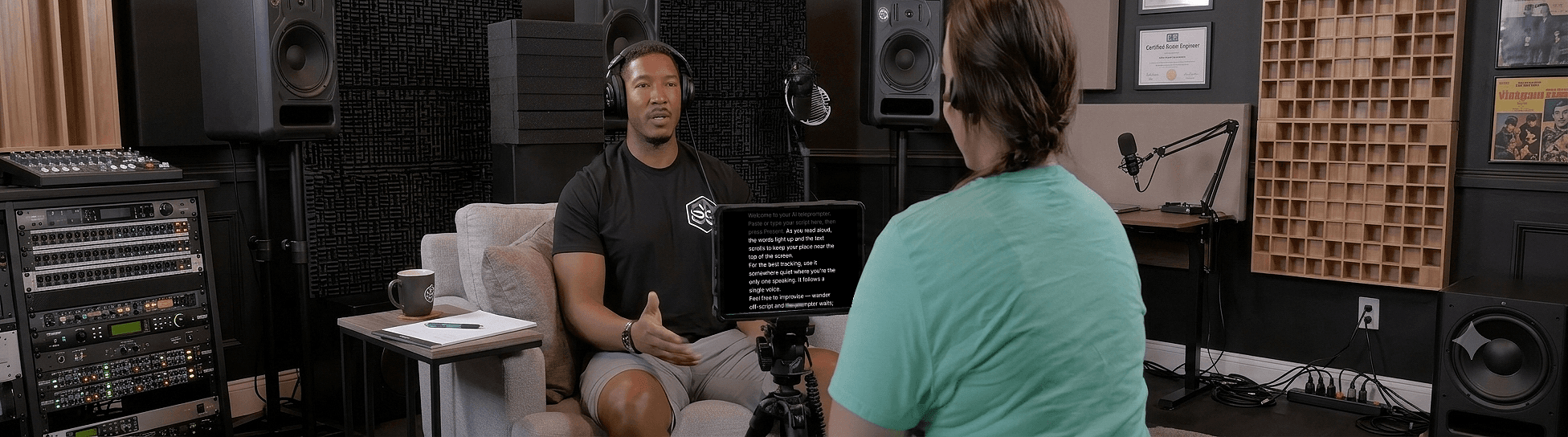
Speak naturally — Let the script follow you
The AI teleprompter that scrolls as you speak — in 60+ languages.