
Script timing calculator
Paste your script, set your speaking pace, and see exactly how long it takes to read aloud — words to minutes, instantly.
0 words · 0 characters. Your text stays in your browser — nothing is uploaded or stored.
Reading time at 140 words per minute
0:00
The same script at other paces
Want to hit that timing on camera? Rehearse it with the free voice-following teleprompter
A script timing calculator converts your word count into speaking time. Paste any script, speech, or video narration below, drag the slider to your natural pace, and you'll see the reading time update live — plus how the same script times out at slower and faster deliveries. Everything runs in your browser, so your text is never uploaded or stored.
How the words-to-minutes calculation works
The math is simple: reading time equals word count divided by words per minute (WPM). If your script is 700 words and you speak at 140 WPM, that's five minutes of talking. The hard part is knowing your real pace — most people guess wrong by 20% or more. Use the presets as a starting point, or take our WPM reading test to measure your actual speed, then dial the slider in.
What's a normal speaking pace?
Speaking pace varies with format and mood, but most spoken content falls in a fairly narrow band:
- Everyday conversation: 120–150 WPM
- YouTube videos and presentations: 130–160 WPM
- Audiobook narration: around 150–160 WPM
- News broadcasting: 160–180 WPM
- Formal speeches with pauses: 100–130 WPM
Words to minutes: quick reference
At a conversational 140 words per minute:
- 150 words ≈ 1 minute
- 350 words ≈ 2 minutes 30 seconds
- 700 words ≈ 5 minutes
- 1,000 words ≈ 7 minutes 9 seconds
- 2,000 words ≈ 14 minutes 17 seconds
Timing tips for scripts read on camera
A raw words-per-minute estimate assumes continuous speech. Real deliveries include breaths, pauses for emphasis, and moments where you look up at the camera — plan for your final runtime to land 10–15% over the calculator's number. Nerves push most people the other way: on camera, beginners tend to speed up. The most reliable fix is rehearsing with a teleprompter that follows your voice, so you can settle into your natural pace instead of chasing a scrolling screen.
Frequently asked questions
How long does it take to read 1,000 words aloud?
At a conversational pace of 140 words per minute, 1,000 words takes about 7 minutes. A slow, deliberate delivery (110 WPM) takes about 9 minutes, while a brisk broadcast pace (180 WPM) gets through it in about 5 and a half minutes.
How many words per minute does the average person speak?
Most people speak at 120–150 words per minute in conversation. Presenters and YouTubers typically land between 130 and 160 WPM, and professional narrators around 150–160 WPM.
How many words is a 5-minute script?
About 650–750 words at a conversational pace of 130–150 WPM. If you pause often or speak deliberately, aim closer to 550–650 words.
Does reading on camera change my pace?
Usually, yes. Nerves make most people speed up on camera, while unfamiliar scripts slow them down with stumbles. Rehearsing aloud a few times — ideally with a teleprompter that follows your voice — gets your on-camera pace much closer to your natural one.
Is my script stored anywhere?
No. The calculator runs entirely in your browser — the text you paste is never uploaded, stored, or shared.
Keep exploring
Speech length calculator
Set your time slot and speaking pace to get the word count your speech should be.
WPM reading test
Read a short passage aloud and measure your words-per-minute speaking pace.
Word counter
Count words, characters, sentences, and paragraphs, and see the reading time silently and aloud.
Teleprompter scroll speed calculator
Convert your speaking pace into the scroll speed a fixed-speed teleprompter needs.
Free speaking tools
Free tools for speakers and creators: count words, time a script, size a speech to your slot, measure your speaking pace, and set a scroll speed. No sign-up.
Sayscroll — AI teleprompter
Paste your script and the prompter scrolls as you speak. Free to try, right in your browser, in 60+ languages.
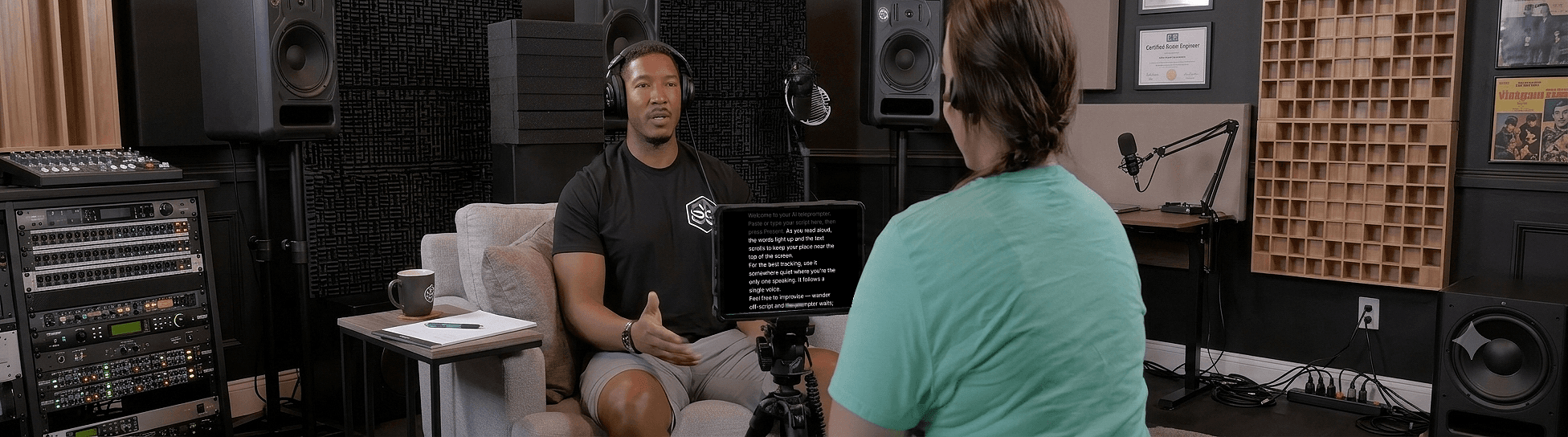
Speak naturally — Let the script follow you
The AI teleprompter that scrolls as you speak — in 60+ languages.